
All About Mosaic Law
- Sep 17, 2023
- 5 min read
As the name may reveal, Mosaic Law is the law that was revealed by Moses upon the Israelites. They are found within the Old Testament, and consist of many different rules that were imposed. A few examples include the cleanliness of foods, social laws, the different feasts that were to be celebrated, and offerings that must be made before the Lord. You can find more all throughout Genesis, Exodus, Leviticus, Numbers, and Deuteronomy. Moral Law is a little different though, and we will be discussing this in our post today.
Civil Law
Civil Law were the laws that were put in place onto the Israelites to keep their nation in order. Much like we have laws under the government, they had laws under God. A great example of this is seen throughout Deuteronomy 24. Here is a small excerpt;
Deuteronomy 24:7 NIV
If someone is caught kidnapping a fellow Israelite and treating or selling them as a slave, the kidnapper must die. You must purge the evil from among you.
This strengthened the relationship between the Israelites and God. They were able to live by His word and His character. It also set the Israelites apart from any other group of people, helping them set an example of what a follower of the Lord should look like and how they should act. This law was for the Israelites, as they were being ruled directly by God, and that no longer applies to today's society. For the world to function, nations must establish their own set of laws. Because of this, we no longer live by this law.
Ceremonial Law
In the Hebrew language, ceremonial laws were referred to as hukkim or chuqqah, which mean “statutes”. Statutes are laws and practices that govern a specific nation. The statutes within the ceremonial law tend to focus followers of God on the Lord Himself. They are divided into directives on how to be restored in God's favor (such as sacrifices and other ceremonies regarding "uncleanness"), reassurances of God's work in Israel (such as feasts and festivals), specific standards intended to set Israelites apart from their pagan neighbors (such as dietary and clothing restrictions), and indicators of the impending Messiah (such as the Sabbath, the ritual of circumcision the Passover festivities, and the purification of the firstborn). Believers of Christ do not have any correlation with ceremonial laws. Memorial holidays like the Feast of Weeks and Passover are ineffective because the church is not of Israel.
Galatians 3:23-25 NIV
“Before the coming of this faith, we were held in custody under the law, locked up until the faith that was to come would be revealed. So the law was our guardian until Christ came that we might be justified by faith. Now that this faith has come, we are no longer under a guardian”
This verse tells us that people of faith are not needed to offer sacrifices or undergo circumcision since Jesus has come. Jesus is considered the “perfect sacrifice” because compared to the Levitical sacrifices, Jesus’ offering of His own Holy self is one that cannot be repeated, making it more powerful. When Jesus sacrificed Himself and died on the cross, He sealed our salvation.
Moral Law
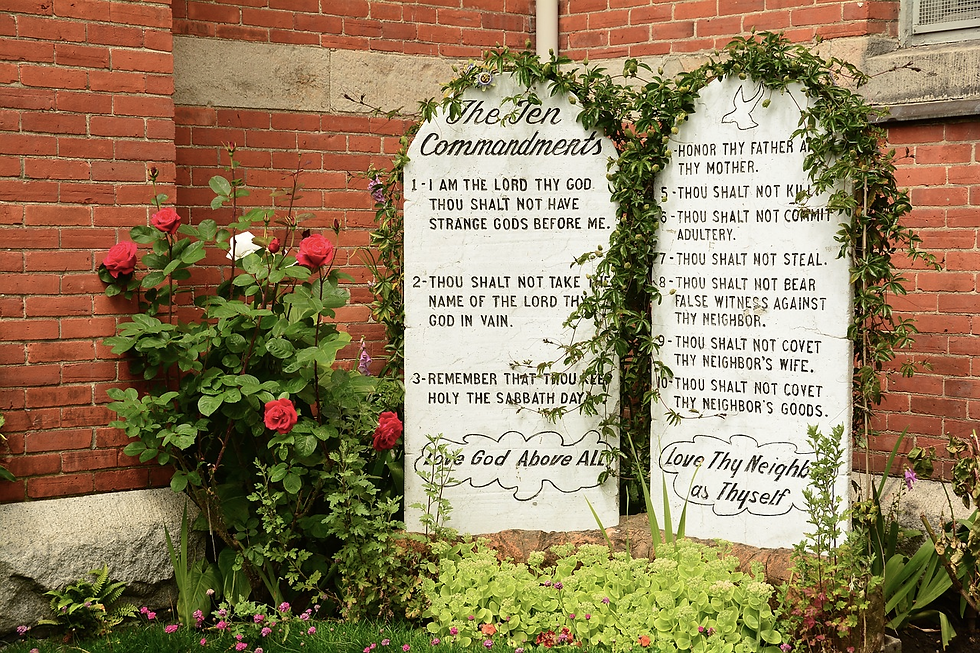
Moral laws are different from civil and ceremonials laws. Mosaic and ceremonial laws were created for the people of Israel, therefore are not everlasting and do change. Moral laws have a foundation within God’s nature. The Ten Commandments are our basis for the moral laws we should follow.
Exodus 20:1-17
“And God spoke all these words:
“I am the Lord your God, who brought you out of Egypt, out of the land of slavery.
“You shall have no other gods before me.
“You shall not make for yourself an image in the form of anything in heaven above or on the earth beneath or in the waters below. You shall not bow down to them or worship them; for I, the Lord your God, am a jealous God, punishing the children for the sin of the parents to the third and fourth generation of those who hate me, but showing love to a thousand generations of those who love me and keep my commandments.
“You shall not misuse the name of the Lord your God, for the Lord will not hold anyone guiltless who misuses his name.
“Remember the Sabbath day by keeping it holy. Six days you shall labor and do all your work, but the seventh day is a Sabbath to the Lord your God. On it you shall not do any work, neither you, nor your son or daughter, nor your male or female servant, nor your animals, nor any foreigner residing in your towns. For in six days the Lord made the heavens and the earth, the sea, and all that is in them, but he rested on the seventh day. Therefore the Lord blessed the Sabbath day and made it holy.
“Honor your father and your mother, so that you may live long in the land the Lord your God is giving you.
“You shall not murder.
“You shall not commit adultery.
“You shall not steal.
“You shall not give false testimony against your neighbor.
“You shall not covet your neighbor’s house. You shall not covet your neighbor’s wife, or his male or female servant, his ox or donkey, or anything that belongs to your neighbor.”
We know God has been the same God since the beginning and will be the same God for days to come. Since God does not change, neither do the moral laws. Even more so, the moral laws are intertwined with our heart posture. While the other laws dealt more with outward attention to God, moral laws start inside of us. To follow God, we must shift our heart to reflect Jesus. According to Romans 14:5, "Each one should be fully convinced in his own mind." The relevance of the Old Testament law to a Christian's life has always been correlated with how helpful it is for loving both God and people. Anyone is free to follow the Sabbath if they believe it will help them do this.
Another point important to mention is that everyone is different, therefore everyone has a different relationship with our Lord. One may have a different perception of sin than someone else. Sin is objective, but when applied to peoples lives, it becomes subjective in some aspects. If you believe something is a sin, even though it's not, and you do it anyway, then it becomes a sin because you are doing something you feel condemned doing. A perfect example of this is seen in Romans 14:23.
"But whoever has doubts is condemned if they eat, because their eating is not from faith; and everything that does not come from faith is sin."


Comments